For most beginners, the stock market looks simple from the outside. Charts appear predictable, strategies seem logical, and success stories make trading look easy. Yet, once real money is involved, reality sets in quickly. Emotions surface, plans fall apart, and small mistakes become expensive lessons.
This gap between knowing about trading and actually trading is where most beginners struggle. The difference isn’t intelligence or motivation—it’s real trading experience. For beginners looking to build a strong foundation, understanding the basics is essential, and this guide on how to start stock market trading the right way explains the process step by step.
Real trading experience exposes mistakes early, builds emotional control, and teaches lessons no book, video, or theoretical course ever can. Let’s break down how practical market exposure helps beginners avoid the most common trading mistakes and develop skills that last.
Why Beginners Make Mistakes in the First Place
Most new traders don’t fail because they lack information. Today, information is everywhere—YouTube, social media, blogs, Telegram channels, and online courses.
The problem is that information without real execution creates false confidence.
Beginners usually:
- Understand concepts but can’t apply them under pressure
- Know rules but break them when money is involved
- Learn strategies but don’t know when not to trade
Real trading experience is the bridge between knowledge and discipline.
Mistake #1: Overtrading Due to Excitement or Fear
One of the most common beginner mistakes is overtrading—taking too many trades, often without strong setups.
Why It Happens
In theory, trading seems slow and controlled. In real markets:
- Candles move fast
- Prices fluctuate constantly
- Fear of missing out (FOMO) kicks in
Beginners feel the need to be “active” to be successful.
How Real Trading Experience Fixes This
When beginners experience:
- A series of unnecessary trades
- Small but repeated losses
- Mental exhaustion
They quickly learn that more trades do not equal more profits.
Real experience teaches:
- Waiting is a trading skill
- Fewer high-quality trades outperform frequent random entries
- Not trading is often the best decision
This lesson cannot be learned through theory—it is felt through experience.
Mistake #2: Ignoring Risk Management
Many beginners focus on how much they can earn, not how much they can lose.
They ask:
- “How big can this trade move?”
Instead of: - “How much am I willing to risk?”
Why Theory Fails Here
Risk management sounds boring in books. Percentages, stop losses, and position sizing feel unnecessary—until losses happen.
What Real Trading Teaches
Once beginners experience:
- A large loss wiping out several small gains
- Emotional stress after ignoring stop losses
- Capital shrinking faster than expected
They begin to respect risk.
Real trading experience teaches:
- Capital protection is the first priority
- Survival matters more than profits
- Consistency comes from controlled losses, not big wins
These lessons stick because they are emotionally charged and personal.
Mistake #3: Letting Emotions Control Decisions
Fear, greed, hope, and revenge trading are invisible enemies.
Beginners often:
- Exit profitable trades too early out of fear
- Hold losing trades too long due to hope
- Take impulsive trades to recover losses
No theoretical lesson prepares someone for emotional pressure when real money is involved.
How Live Market Experience Builds Emotional Control
Through real trading, beginners:
- Experience fear during drawdowns
- Feel greed when profits rise
- Understand regret after impulsive decisions
Over time, they learn:
- Emotion is part of trading—not a weakness
- Rules exist to control emotions, not eliminate them
- Discipline comes from repeated exposure, not motivation
Just like learning to drive, confidence comes from time on the road—not reading traffic rules.
Mistake #4: Strategy Hopping
Another common mistake is constantly switching strategies.
Beginners think:
- “This strategy doesn’t work”
- “That indicator looks better”
- “Someone else is making money with something else”
The Hidden Problem
The issue usually isn’t the strategy—it’s:
- Lack of patience
- No execution discipline
- Incomplete market understanding
What Real Trading Experience Teaches
In real markets, beginners begin to see:
- Every strategy has losing trades
- Even good setups fail sometimes
- Consistency depends on execution, not indicators
Real experience builds trust in:
- A single method
- A defined trading plan
- Long-term thinking instead of instant results
This prevents the endless and damaging cycle of strategy hopping.
Mistake #5: Poor Entry and Exit Decisions
On paper, entries and exits look perfect. In real markets:
- Entries feel late
- Exits feel uncertain
- Price behaves unpredictably
Beginners often enter too late and exit too early.
How Experience Sharpens Execution
Live trading shows beginners:
- How spreads affect entries
- How volatility changes candle behavior
- Why waiting for confirmation matters
They begin to learn:
- Patience improves entry quality
- Planned exits reduce panic
- Letting winners run is harder than cutting losses
These skills develop only through screen time and repetition.
Mistake #6: Unrealistic Expectations
Many beginners expect:
- Daily profits
- Quick financial freedom
- Instant consistency
This mindset creates pressure and forces bad decisions.
What Real Trading Experience Reveals
Real markets quickly correct expectations by showing:
- Drawdowns are normal
- Losing days happen to everyone
- Progress is non-linear
With experience, beginners learn:
- Trading is a skill, not a shortcut
- Consistency is built slowly
- Professional traders focus on process, not excitement
This mental shift is critical for long-term success.
Why Practice Alone Isn’t Enough
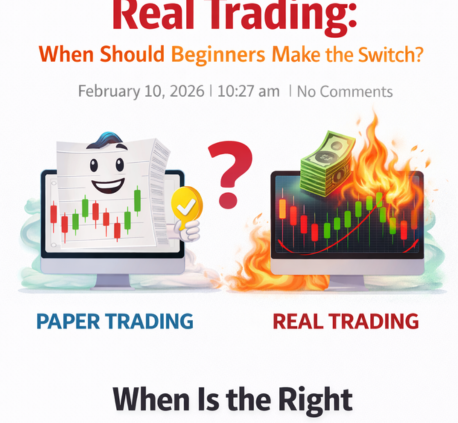
Paper trading is useful, but it lacks:
- Emotional pressure
- Real consequences
- Decision-making stress
Only real capital exposure teaches:
- Responsibility
- Discipline
- Emotional accountability
That said, beginners don’t need to trade large amounts. The goal is experience, not risk. This is why many beginners choose structured stock market classes that combine real trading exposure with guided learning, helping them build discipline and confidence before trading independently.
How Beginners Can Gain Real Trading Experience Safely
Real experience doesn’t mean reckless trading. Beginners should focus on controlled exposure.
Smart ways to gain experience:
- Trade with small capital
- Follow one strategy consistently
- Maintain a trading journal
- Track both emotions and results
- Review mistakes honestly
Learning comes faster when mistakes are analyzed, not hidden.
The Role of Structured Learning and Mentorship
Beginners who gain real experience alongside structured guidance grow faster.
Guidance helps by:
- Preventing major early mistakes
- Providing feedback during losses
- Explaining market behavior rationally
Real trading plus structured learning creates:
- Confidence based on skill
- Discipline built through habit
- Growth backed by experience
Final Thoughts
Trading is not about predicting the market—it’s about managing yourself within it.
Beginners don’t fail because they lack knowledge. They fail because:
- They haven’t felt real pressure
- They haven’t faced emotional consequences
- They haven’t learned through experience
Real trading experience turns theory into understanding, mistakes into lessons, and fear into discipline. Vaishvik Traders can help you accelerate the learning by combining practical trading exposure with disciplined and structured learning.
For beginners, the goal shouldn’t be quick profits. It should be learning the market through real exposure, small steps, and honest self-reflection.
That is how traders are built—not overnight, but through experience that teaches what no textbook ever can.