You’ve probably seen the ads. “Make ₹50,000 a day from home.” “Trade forex like the pros.” Someone on Instagram showing their MetaTrader dashboard with a green P&L. It looks exciting. It looks easy.
And then you search “forex trading Indiaw” and spend the next two hours more confused than when you started.
Is it legal? Is it illegal? Which broker should you use? Can you get fined? Can you go to jail?
This article answers all of that — clearly, honestly, and without the hype.
First, Let’s Get the Big Question Out of the Way
Yes, forex trading is legal in India.
But it comes with a conditional “yes” that most people on YouTube and Telegram conveniently skip over and that silence is exactly how traders end up in trouble.
Here’s the reality: India has one of the most strictly regulated currency trading environments in the world. The rules exist for a genuine reason to protect the Indian Rupee, prevent capital from flowing out of the country unchecked, and ensure that retail traders like you are operating in a safe, transparent system.
The moment you understand why the rules exist, they stop feeling like obstacles and start making a lot more sense.
Who Actually Makes the Rules?
Three bodies govern forex trading in India, and you’ll keep seeing their names everywhere:
RBI (Reserve Bank of India) manages the country’s monetary policy and controls how foreign currency moves in and out of India. It decides which currency pairs can be traded and maintains a public list of platforms that are not authorised to offer forex services in India.
SEBI (Securities and Exchange Board of India) regulates brokers and trading platforms. If a broker wants to offer currency trading to Indian residents, they must be SEBI-registered no exceptions.
FEMA (Foreign Exchange Management Act, 1999) is the law that ties it all together. Any forex transaction that violates FEMA’s guidelines intentionally or not can result in penalties.
What Can You Actually Trade?
This is where most beginners get blindsided.
You cannot legally trade any currency pair you want in India. The pairs permitted for retail traders are limited to those that include the Indian Rupee (INR) on one side:
- USD/INR — the most liquid and widely traded pair in India
- EUR/INR
- GBP/INR
- JPY/INR
There are also a handful of approved cross-currency pairs EUR/USD, GBP/USD, and USD/JPY but these can only be traded on Indian exchanges (NSE or BSE), not through international platforms.
Popular global pairs like AUD/JPY, GBP/CHF, or NZD/USD? Not permitted for retail trading under Indian law.
This isn’t as limiting as it sounds. USD/INR alone offers plenty of opportunity it’s actively traded, reacts strongly to macroeconomic events, and is covered extensively in any serious forex course.
The Part Everyone Gets Wrong: Offshore Brokers
If you’ve searched for forex trading platforms, you’ve come across names like XM, IC Markets, Exness, or FXTM. These are globally respected brokers. They accept Indian clients. They offer hundreds of currency pairs, high leverage, and slick platforms.
They are also not SEBI-registered. And using them for speculative forex trading from India is a violation of FEMA.
The RBI maintains an “Alert List” — a publicly available, regularly updated list of platforms that are unauthorised to deal in forex in India. As of late 2025, this list contains over 95 names. Many are legitimate, well-regulated companies in the UK or Australia. That doesn’t matter. For an Indian resident, using them for speculative forex trading creates real legal risk.
The potential consequences of illegal forex trading in India include:
- Monetary fines up to ₹10 lakh under FEMA
- An additional daily penalty of ₹5,000 for continued violations
- Bank account freezes or fund seizures
- Income tax scrutiny
- In severe cases, criminal proceedings
This isn’t meant to scare you. It’s meant to make sure you start the right way.
Is There a Legal Way to Trade Global Forex Pairs?
Yes — and this is something most articles don’t explain properly.
GIFT City (Gujarat International Finance Tec-City) isIndia’s first international financial services centre. The IFSCA (International Financial Services Centres Authority) regulates brokers operating here differently from mainland India.
Under the Liberalised Remittance Scheme (LRS), you can remit up to $250,000 per year to a broker registered in GIFT City and legally trade global currency pairs including EUR/USD, GBP/USD, and more.
Several prominent Indian brokers have launched GIFT City subsidiaries specifically for this purpose. If you’re serious about global forex exposure and want to do it legally, this is the path to explore once you’re ready.
How to Start Forex Trading Legally in India (Step by Step)
If you’re a beginner, here’s the practical roadmap:
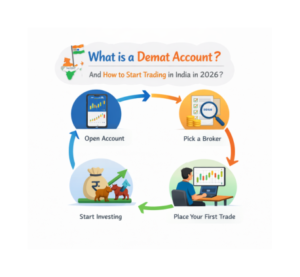
Step 1: Open an account with a SEBI-registered broker
Stick to well-known names: Zerodha, Upstox, Angel One, ICICI Direct, HDFC Securities. All of them offer currency derivatives trading on NSE and BSE. You’re not missing out by using these platforms you’re actually protecting yourself.
Step 2: Complete KYC
This is mandatory for any financial account in India. You’ll need your PAN card, Aadhaar, proof of address, and bank details. Most brokers now offer digital KYC that takes under 30 minutes.
Step 3: Link your bank account
All deposits and withdrawals must go through an Indian bank account. This ensures full compliance with RBI guidelines.
Step 4: Get your Unique Client Code (UCC)
Your broker will generate this automatically after your KYC is complete. Every trade you place will be tracked under this code.
Step 5: Start with USD/INR
Once your account is active, start with the most traded pair. Study how it moves. Watch how RBI announcements, US inflation data, and crude oil prices affect it. Learn before you risk.
What Should Beginners Actually Learn?
Forex trading isn’t complex because of regulations. It’s complex because of markets and markets don’t care about your optimism.
Before you place your first trade, you genuinely need to understand:
Currency pairs and how pricing works. What does it mean when USD/INR is at 84.50? What moves it up or down?
Technical analysis. How to read candlestick charts, identify support and resistance levels, and use indicators without drowning in them.
Fundamental analysis for currency markets. RBI rate decisions, US Fed meetings, inflation data, GDP releases these drive currency prices far more than any chart pattern.
Risk management. This is the one most beginners skip and then regret. How much of your account do you risk per trade? What’s your stop loss? What’s your position size? Without answers to these questions, even a good strategy will eventually destroy your account.
Trading psychology. Currencies move fast. Losses feel personal. Fear and greed hit differently when real money is involved. Knowing this in advance doesn’t make you immune but it does make you more prepared.
Forex vs. Equity Trading: What’s Different?
Many traders in India come from the stock market and expect forex to work similarly. Some things transfer technical analysis, discipline, risk management. But there are key differences:
Currency markets in India (on NSE/BSE) trade from 9:00 AM to 5:00 PM, unlike global forex which runs 24/5. This makes timing and session awareness particularly important.
Forex trading in India happens through futures and options (F&O) on currency pairs, not spot trading. You’re not actually buying dollars you’re trading contracts. Understanding this distinction matters for how you calculate profits, losses, and margin.
Currencies tend to trend more gradually than individual stocks but can react sharply to macroeconomic events. The USD/INR pair, for instance, moves significantly during US Fed announcements or whenever there’s major RBI intervention.
When Are You Ready to Start Trading?
This is the question nobody asks seriously enough. Everyone wants to know how to start. Fewer people stop to ask when they’re genuinely ready.
Here’s a simple test. Before you put real money into currency trading, you should be able to:
- Explain what moves USD/INR and why
- Read a basic candlestick chart and identify a trend
- Set a stop loss and understand exactly what it protects you from
- Answer the question: “If I lose 5 trades in a row, what happens to my account?”
- Have traded on a paper account or demo for at least 3–4 weeks with consistent logic
If any of those feel shaky, that’s where to focus first. A few weeks of focused learning will save you months of painful, expensive mistakes.
Final Thoughts
Forex trading in India isn’t the wild, unregulated playground it can be in other parts of the world and that’s not a bad thing. The structure that SEBI and RBI have created means that when you trade legally, you’re operating in a transparent, exchange-regulated environment with real investor protections.
The traders who get into trouble are usually the ones chasing shortcuts. The offshore broker with 500:1 leverage. The Telegram group promising guaranteed calls. The YouTube course that skips over risk management to get to the “strategies.”
The traders who do well are the ones who slow down first. Who learn the rules. Who practice before they commit real capital. Who understand that forex is a skill and like any skill, it rewards those who respect the learning curve.
If you’re starting out in Jaipur or anywhere in India, the legal path is clear. SEBI-regulated broker, INR pairs, proper education, consistent practice. Start there.
Want to learn forex trading properly? Vaishvik Traders offers structured Forex & Commodity Trading courses with live market sessions, ICT strategies, and lifetime mentorship. Book your free demo class →
Frequently Asked Questions
Is forex trading taxed in India? Yes. Profits from currency derivatives are taxable under the head “Business Income” or “Capital Gains” depending on your trading frequency and intent. Consult a CA familiar with trading taxation to stay compliant.
Can I trade EUR/USD legally in India? Yes, but only on Indian exchanges (NSE/BSE) through a SEBI-registered broker. You cannot trade it through an offshore platform.
What is the minimum amount needed to start forex trading in India? There’s no fixed minimum, but most SEBI-registered brokers require a small initial deposit — often ₹5,000 to ₹10,000 to begin trading currency futures. That said, start small and prioritise learning over capital deployment.
Are apps like XM, Exness, or FXTM legal in India? Many international brokers are on the RBI’s Alert List, meaning they are not authorised to operate in India under FEMA. Using them for speculative trading carries legal risk, even if the platforms themselves are globally regulated.
What’s the best currency pair for beginners in India? Start with USD/INR. It’s the most liquid, most studied, and most predictable of the permitted pairs. Once you understand how it moves, branching out to EUR/INR or GBP/INR becomes much easier.